



Why Can a Bitcoin Wallet Generate a New Address After Each Payment
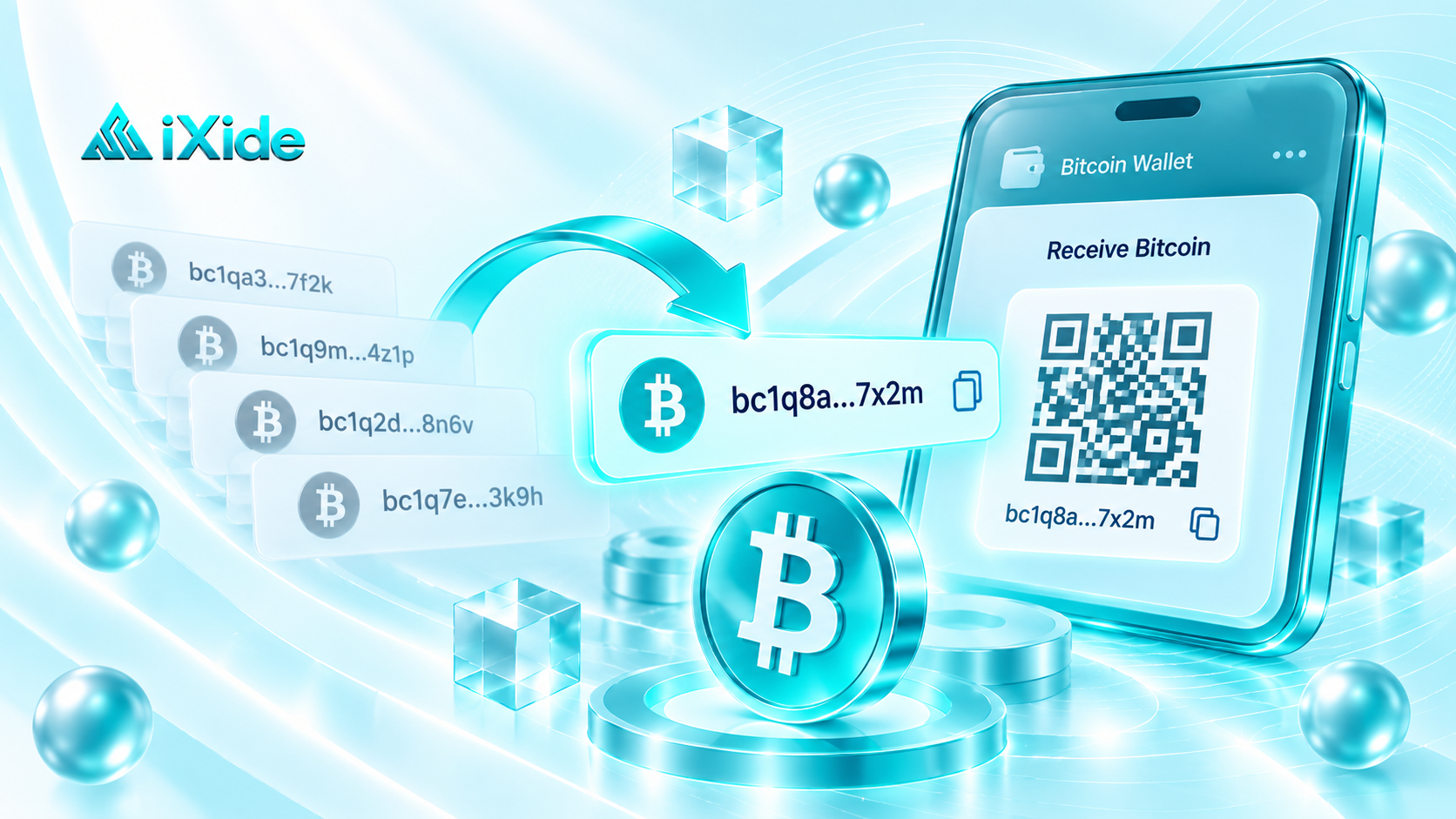
A user opens a Bitcoin wallet and sees an address for receiving BTC:
bc1q8a...7x2m
They receive a payment, then later tap “Receive” again — and the wallet shows a different address:
bc1q4f...9k3p
A logical question arises:
Where did the old address go, and why does the wallet keep generating new ones?
In most modern Bitcoin wallets, this is completely normal. A single wallet can manage many addresses that belong to the same owner and can be restored from the same seed phrase.
The main reason for changing addresses is better privacy.
One Bitcoin Wallet Does Not Mean One Address
Beginners often think of a crypto wallet like a bank account:
one wallet = one address.
Bitcoin can work differently.
A modern wallet can manage many addresses at the same time:
bc1qAAA...
bc1qBBB...
bc1qCCC...
All of them may belong to the same wallet.
The user sees one combined balance even though the BTC may actually be distributed across different addresses and UTXOs.
Where Do New Addresses Come From?
Most modern Bitcoin wallets are HD wallets — Hierarchical Deterministic Wallets.
Such a wallet can generate a large number of keys and addresses from a single original secret.
In simplified form:
Seed phrase → many private keys → many Bitcoin addresses
So the wallet does not need to create a new seed phrase every time it generates a new receiving address.
A single seed phrase can be used to derive many addresses.
Why Does a Bitcoin Wallet Change the Address?
The main reason is privacy.
Bitcoin is a public blockchain.
Anyone can open a blockchain explorer and view:
an address;
its balance;
incoming transactions;
outgoing transactions;
transaction times;
related activity.
If a user receives all BTC to the same address repeatedly, it becomes much easier to link those transactions together.
Example of Reusing One Address
Imagine an online store accepts Bitcoin.
It uses one address for every customer:
bc1qSHOP...
Customer #1 sends 0.01 BTC.
Customer #2 sends 0.05 BTC.
Customer #3 sends 0.2 BTC.
Anyone who knows that address can open the blockchain and see all of those payments.
They may be able to estimate:
payment volume;
number of transactions;
current balance;
where the BTC moves afterward.
From a privacy perspective, this is not ideal.
What Changes When New Addresses Are Used?
If different addresses are used for different payments:
Payment 1 → Address A
Payment 2 → Address B
Payment 3 → Address C
it becomes more difficult to connect those payments with each other.
This does not make Bitcoin completely anonymous, but it reduces the amount of information revealed through repeated address reuse.
Does the Old Address Stop Working?
Usually, no.
If the address truly belongs to your wallet, it normally remains under the wallet’s control.
For example:
Yesterday the wallet showed:
bc1qAAA...111
Today it shows:
bc1qBBB...222
If someone sends BTC to yesterday’s address again, the funds will usually still arrive in the same wallet.
A new address does not mean the old one has been deleted from the blockchain.
Then Why Use a New Address at All?
Because being able to reuse an old address and being advised to do so are two different things.
Technically, the old address may still receive funds.
But for privacy reasons, Bitcoin users are generally better off using a new receiving address for new payments.
Modern wallets often automate this process.
Does a New Address Mean a New Wallet?
No.
This is one of the most important points.
If the app shows a new Bitcoin address, it does not mean a completely new wallet has been created.
For example:
Address A: 0.01 BTC
Address B: 0.02 BTC
Address C: 0.03 BTC
The wallet may show the user:
Total balance: 0.06 BTC
All of these funds can still be managed from the same wallet.
How Is the Seed Phrase Connected to All These Addresses?
The seed phrase allows the wallet to restore its structure of keys and addresses.
So if the device is lost, the user can install a compatible wallet and restore access using the seed phrase.
After recovery, the wallet can rediscover BTC stored across multiple derived addresses.
That is why the seed phrase is much more important than any single Bitcoin receiving address.
An address is used to receive funds.
The seed phrase helps restore control over the wallet.
Does the Wallet Store Millions of Addresses in Advance?
Not necessarily in a literal sense.
An HD wallet uses a mathematical system that allows addresses to be deterministically generated in a specific sequence.
This means that from the same original secret, the wallet can reproduce the same addresses again.
They are not just a random collection of unrelated accounts.
What Is a Derivation Path?
HD wallets use a structure called a derivation path to generate addresses.
It defines how keys are derived from the original wallet data.
Most users never need to manage this manually.
Modern wallets handle it automatically.
However, when restoring an old or unusual wallet, using a compatible address standard and the correct derivation path can sometimes matter.
Why Can Bitcoin Addresses Look Different?
Bitcoin supports several address formats.
For example:
1...
Older Legacy addresses.
3...
Often associated with P2SH.
bc1q...
SegWit addresses.
bc1p...
Taproot addresses.
So a new address may not only have different characters — it may also use a different format if the wallet settings or account type have changed.
That does not necessarily mean something is wrong.
What Is a Change Address?
There is another type of Bitcoin address that often surprises beginners — the change address.
Bitcoin uses the UTXO model.
Imagine your wallet has one UTXO worth:
0.1 BTC
You want to send:
0.03 BTC
The wallet may use the entire 0.1 BTC UTXO:
0.03 BTC → recipient
a small amount → network fee
the remainder → a new change address in your own wallet
That new address may look completely unfamiliar.
But it may still belong to your wallet.
Why Does a Blockchain Explorer Show an Unknown Address?
Because of change, a user may open a TXID and see two outputs:
0.03 BTC → recipient
0.069... BTC → unknown address
and think:
“Where did the rest of my Bitcoin go?”
In reality, the second address may be an automatically generated change address controlled by the same wallet.
The funds were not sent to another person.
Receiving Address and Change Address Are Different
It is useful to separate these two concepts.
Receiving Address — the address the wallet shows you for receiving BTC from someone else.
Change Address — an internal address the wallet may use to send the remainder of your own transaction back to you.
Both can be generated automatically by the same HD wallet.
Why Does Bitcoin Work This Way?
Bitcoin uses the UTXO — Unspent Transaction Output model.
Instead of one simple value such as:
Balance = 1 BTC
the wallet actually manages a set of separate unspent outputs.
For example:
0.15 BTC
0.04 BTC
0.31 BTC
0.50 BTC
Together, the wallet displays:
1 BTC
When creating a transfer, the wallet selects the necessary UTXOs and constructs a new transaction.
Using new addresses works naturally with this model and can improve privacy.
Why Does Address Reuse Reduce Privacy?
Imagine you publish one Bitcoin address on a website.
If you continue using the same address for years, anyone can track all activity connected to it.
If that address becomes linked to your identity, it becomes easier to analyze your financial activity.
That is why Bitcoin wallets often follow this pattern:
used address → new address for the next payment
This is not a strict Bitcoin protocol requirement, but it is a common wallet privacy practice.
Does the Wallet Generate a New Address After Every Transaction?
Not necessarily after every single incoming transaction.
Behavior depends on the wallet.
One wallet may show a new address after the previous one has been used.
Another may rotate it after detecting a payment.
A third may let the user manually generate the next receiving address.
So the more accurate statement is:
modern Bitcoin wallets may regularly change receiving addresses, especially after they have already been used.
Should You Give the Sender the New Address?
If someone is going to send you a new payment, it is generally better to provide the current receiving address shown by your wallet.
There is no need to search for an old address just because payments to it worked before.
Using the current address follows the intended behavior of the HD wallet and helps improve privacy.
What About Bitcoin Addresses on Exchanges?
This can work differently.
A centralized exchange manages its own Bitcoin infrastructure.
It may:
keep the same deposit address for a long time;
change it periodically;
assign a new address to the user;
use its own internal address system.
So the behavior of a personal Bitcoin wallet should not automatically be applied to an exchange.
If a service shows you a new deposit address, it is better to use the current details for the next transfer.
Why Shouldn’t You Keep Only One Old Bitcoin Address as a Backup?
A public address is not a wallet backup.
Knowing:
bc1q...
is not enough to spend the BTC.
To control the funds, you need the corresponding private key or a way to restore the wallet.
So your backup should be the recovery method provided by the wallet — not a list of old receiving addresses.
Can You See All Your Addresses?
Some advanced Bitcoin wallets allow users to view:
receiving addresses;
change addresses;
UTXOs;
derivation paths;
usage history for each address.
Most ordinary users do not need this level of detail.
The wallet usually manages everything automatically.
What Does This Mean for IXIDE Users?
If you are using IXIDE and need to provide a Bitcoin address for receiving BTC, use the current address shown by your wallet.
If yesterday your wallet displayed:
bc1qAAA...
and today it shows:
bc1qBBB...
this does not necessarily mean anything has happened to the wallet.
Most likely, the app has simply generated the next address from your HD wallet.
Before creating an order, check:
that the address belongs to your wallet;
that Bitcoin is selected;
that the full address was copied correctly;
that you are using the details from the current order.
IXIDE Recommends
Do not be alarmed if your Bitcoin wallet periodically changes the receiving address.
For modern HD wallets, this is normal behavior.
For a new transfer, it is better to use the current receiving address shown by the wallet rather than copying an old address from a previous transaction.
And always keep your seed phrase secure — it is what allows you to restore control over the addresses associated with your wallet.
Key Takeaway
A Bitcoin wallet may generate a new address not because the old one stopped working.
It does this mainly to improve privacy.
One HD wallet can manage many addresses:
one seed phrase → many keys → many Bitcoin addresses.
So receiving a new address after a Bitcoin payment is usually completely normal.
The simplest rule to remember is:
a new address does not mean a new wallet.
It may simply be another address belonging to the same Bitcoin wallet.