



IXIDE: Solana ETF Surpasses $1 Billion as Institutional Interest in SOL Grows
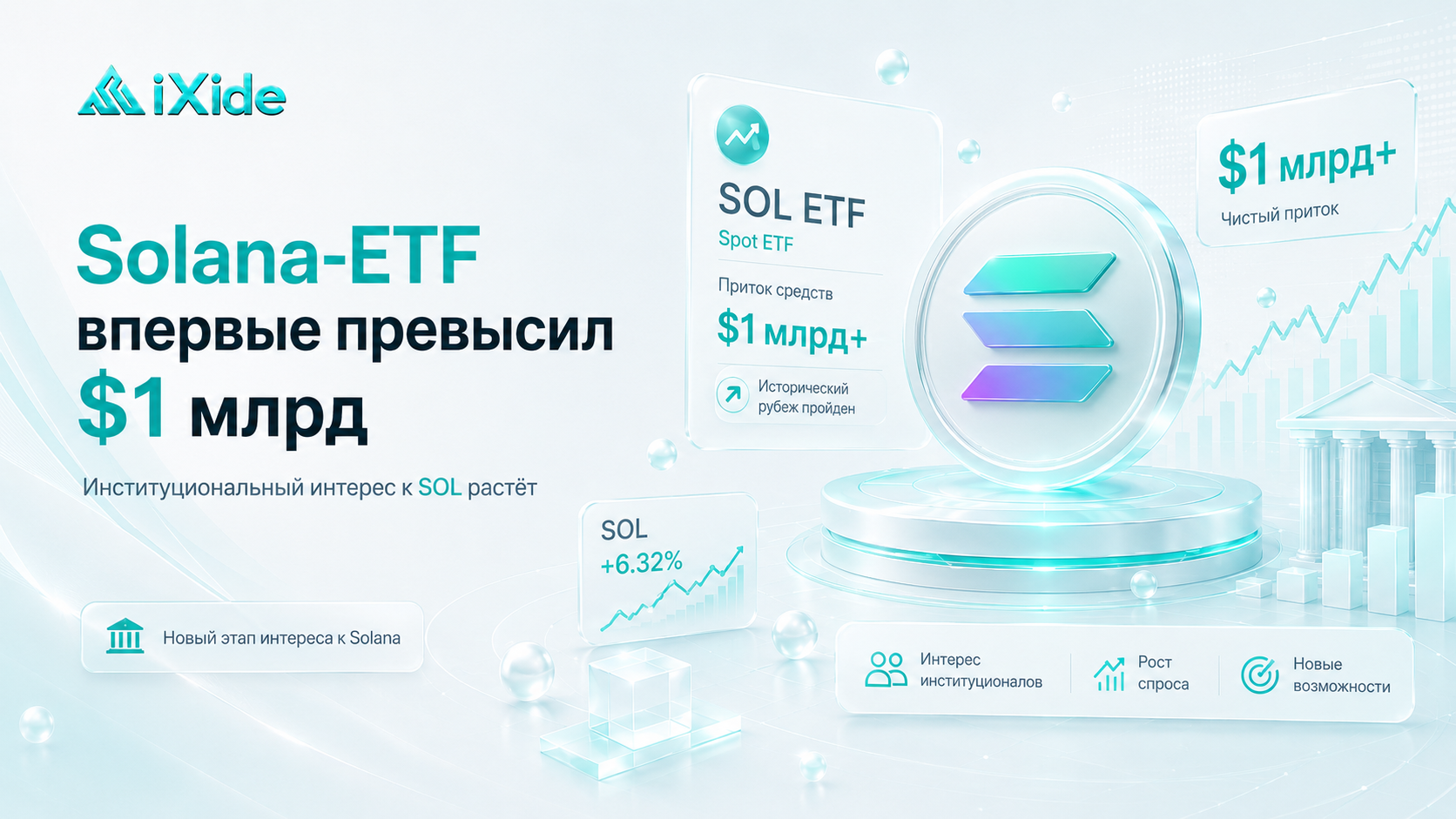
The Bitwise Solana Staking ETF (BSOL) has surpassed $1 billion in assets under management less than a year after its launch.
For Solana, this is an important milestone: interest in SOL is growing not only among retail traders, but also through regulated investment products used by institutional investors.
What Happened
The Bitwise Solana Staking ETF reached the $1 billion AUM milestone roughly ten months after launch.
The fund now represents a significant share of the total assets held across exchange-traded products linked to Solana.
This shows that SOL is gradually becoming more visible among crypto assets that institutional investors can access through traditional financial infrastructure.
Why This Matters for Solana
For a long time, most attention in the crypto ETF market was focused on Bitcoin and Ethereum.
Now, similar investment infrastructure is beginning to develop around other major digital assets.
Solana is particularly interesting because its network is widely used for:
DeFi;
stablecoins;
asset tokenization;
payments;
NFTs;
decentralized applications.
The growth of Solana-related ETFs can make exposure to SOL more accessible to investors who do not want to buy tokens directly, create crypto wallets or manage private keys.
Why a Staking ETF Is Especially Interesting
BSOL is notable because it is connected not only to the market price of Solana, but also to staking.
In the Solana network, SOL holders can participate in securing the blockchain by delegating tokens to validators and potentially earning staking rewards.
An investment product that combines exposure to SOL with staking-related returns may be particularly attractive to long-term investors.
This model may be one of the reasons behind the fund’s rapid growth.
Institutional Interest in Solana Is Expanding
Interest in Solana is not limited to ETFs.
Public companies and institutional participants have also been increasing their exposure to SOL.
This suggests that an investment ecosystem is gradually forming around Solana — including ETFs, corporate holdings and other institutional products.
In some ways, this resembles what the market previously saw with Bitcoin.
What This Means for the Market
Crossing the $1 billion mark does not guarantee that the price of SOL will continue to rise.
However, it does show that interest from larger market participants is becoming more significant.
If capital continues flowing into Solana-related ETFs, the market will closely watch how this affects:
demand for SOL;
the amount of tokens available on the market;
staking activity;
liquidity;
volatility.
The more capital enters through regulated financial products, the stronger the connection between traditional finance and the crypto market becomes.
What This Means for IXIDE Users
For IXIDE users, developments around Solana are another example of how quickly the structure of the crypto market can evolve.
Assets that only a few years ago were used mainly inside the crypto ecosystem are gradually becoming part of the traditional investment market.
When exchanging SOL or other volatile cryptocurrencies, it is still important to pay attention to:
the current exchange rate;
the selected network;
available reserves;
the final amount received;
current market conditions.
What Happens Next
One of the key indicators to watch will be the future flow of capital into Solana ETFs.
If institutional investors continue increasing their exposure, this could support further interest in SOL.
At the same time, ETFs do not eliminate market risk.
Solana remains a volatile crypto asset, and its price can move sharply in either direction.
IXIDE Opinion
At IXIDE, we believe the Solana ETF crossing the $1 billion mark is interesting not only because of the number itself, but because of what it says about the changing attitude of traditional finance toward SOL.
After Bitcoin and Ethereum, institutional infrastructure is now expanding more noticeably toward other major blockchain ecosystems.
If this trend continues, competition between leading blockchain networks may increasingly depend not only on technology and user activity, but also on how deeply each ecosystem becomes integrated into traditional financial products.